
TL;DR:
Effective technical translation depends on ISO 17100-compliant workflows, validated terminology management, and risk-based AI integration to ensure safety and compliance globally. Building and maintaining glossaries and translation memories optimizes consistency, reduces errors, and supports faster project delivery. Prioritizing these practices minimizes costly failures and enhances translation quality across complex documentation.
Technical translation is the precise conversion of domain-specific documents, requiring not just bilingual fluency but deep subject-matter expertise, validated terminology, and structured quality workflows. For product development and localization teams, getting this wrong means more than a bad sentence. It means safety risks, compliance failures, and users who cannot operate your product. Standards like ISO 17100 and IEC/IEEE 82079-1 exist precisely because the stakes are that high. This guide breaks down the quality frameworks, terminology practices, and AI integration strategies that separate bulletproof technical document localization from costly guesswork.
What are the essential quality standards in technical translation?
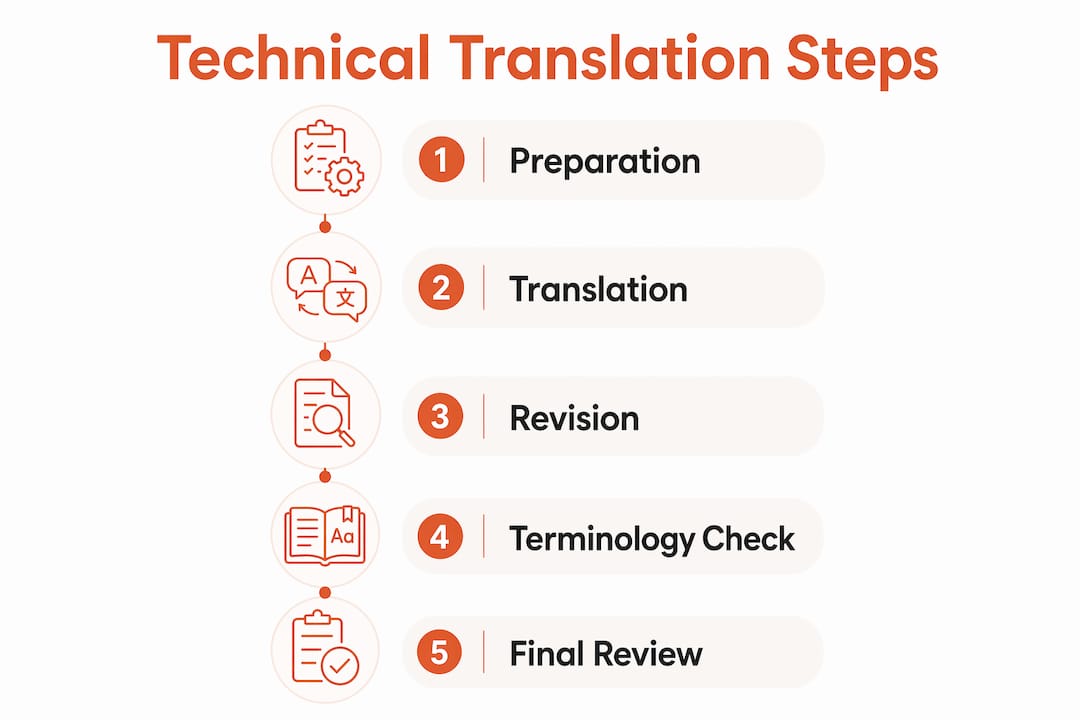
ISO 17100 defines the minimum acceptable workflow for professional technical translation: a two-stage process combining initial translation with mandatory independent revision by a second qualified linguist. This is not optional under the standard. It is the structural guarantee that errors caught by a fresh set of expert eyes never reach your end users.
The standard also sets hard requirements for who can do the work. Translators and revisers must hold relevant academic degrees or demonstrate extensive professional experience in both the source and target language domains. That qualification requirement transforms how you resource a project. You are not hiring a bilingual generalist. You are staffing a subject-matter expert who happens to translate.
IEC/IEEE 82079-1 adds a second layer of obligation, specifically for user instructions and product documentation. The EU-recognized standard requires that instructions be clear, understandable, and tailored to the target audience while preserving the original safety and attention hierarchy. A warning label that loses its urgency in translation is a legal liability, not just a stylistic failure.
Here is what compliance with both standards requires in practice:
Qualified translators: Subject-matter expertise verified through academic credentials or documented professional experience
Independent revision: A second linguist reviews the full translation, not just spot-checks
Preserved information hierarchy: Safety warnings, cautions, and critical steps must carry the same weight in the target language
Auditability: Every stage of the workflow is documented and traceable
Pro Tip: When evaluating specialized translation services, ask providers directly whether their workflow is ISO 17100-certified. If they cannot produce documentation of their revision process, treat that as a red flag, not a minor gap.
The operational implication is significant. High-stakes technical documents require separate staffing for translation and revision roles. That doubles the linguist headcount per project and increases timeline estimates. Build that into your release planning from day one.
How does terminology management impact technical translation quality?
Terminology management is the practice of building, maintaining, and enforcing a controlled vocabulary across all translated documents and languages. Without it, the same component gets called three different things across your user manual, your API documentation, and your safety guide. That inconsistency does not just confuse users. It creates compliance exposure and, in regulated industries, genuine safety risk.
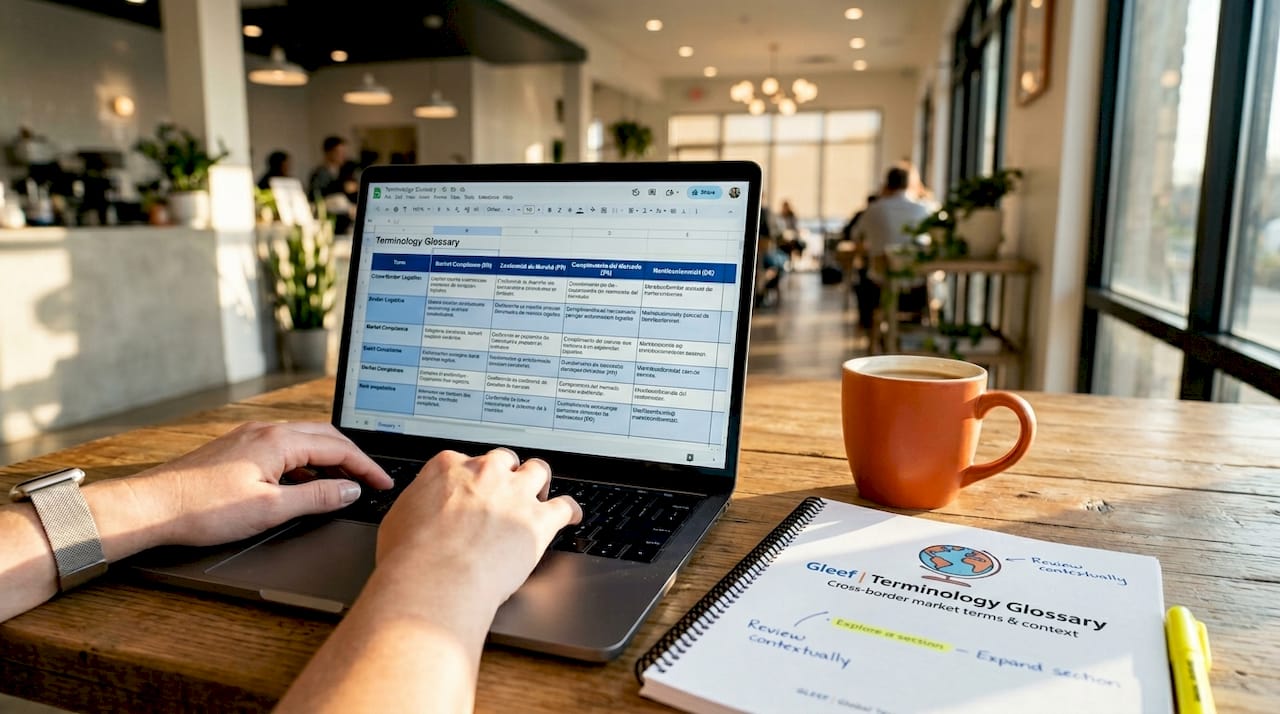
The standards governing this area include ISO 30042, which defines terminology management systems, and IEC 60050, the international electrotechnical vocabulary. EN ISO 12100 covers safety terminology for machinery. Together, they form the framework that prevents inconsistent translations from undermining the integrity of your entire documentation set.
Building a client glossary that actually works requires more than a list of approved words. Each entry needs:
The term itself in the source language
The approved translation in each target language
A definition that clarifies scope and usage context
Usage examples drawn from real product documentation
Forbidden alternatives that translators must not use
Translation memories (TMs) extend this further by storing previously approved sentence-level translations. When a sentence appears again in a new document version, the TM surfaces the approved version automatically. This cuts translation time on iterative documentation updates and enforces consistency across projects and translators.
Approach | Consistency | Speed | Risk level |
|---|---|---|---|
No glossary or TM | Low | Slow (rework) | High |
Glossary only | Medium | Moderate | Medium |
Glossary + TM | High | Fast | Low |
Terminology errors in technical documents cause user confusion, failed audits, and in safety-critical contexts, physical harm. The investment in a maintained glossary pays back every time a new document version ships without a terminology review cycle.
Pro Tip: Assign a terminology owner on your localization team, not just your translation vendor. Internal ownership means your glossary evolves with your product, not six months behind it.
What are the unique challenges in translating technical product documentation?
The most common bottleneck in technical document localization is not language. It is format. Engineering drawings, scanned PDFs, and legacy CAD exports arrive as non-editable files that require reconstruction before a translator can touch them. Modern document reconstruction tools convert scanned PDFs into editable, layout-preserved formats, removing a major bottleneck from the translation cycle. That capability alone can cut days from a project timeline.
Beyond format, version control is a persistent problem. When source documents are updated mid-project without clear change logs, translators work from outdated content. The fix is straightforward: finalize your source document before translation begins, and use a version-controlled file system that flags every change with a timestamp and author.
Here are the most common challenges product teams face, along with practical solutions:
Non-editable source files: Use PDF-to-editable conversion tools before sending files to translators; never ask a translator to retype content from a scanned image
Inconsistent source terminology: Run a terminology audit on your source document before translation begins, not after
Local unit and measurement conventions: Specify target-market conventions (metric vs. imperial, date formats, voltage standards) in your project brief
Cultural adaptation gaps: Identify culturally specific references, idioms, or visual conventions in your source content and flag them for the translator upfront
Regulatory variation by market: EU, US, and APAC markets have different documentation requirements; map these before you scope the project
Challenge | Impact | Solution |
|---|---|---|
Scanned PDF source files | Translation delays, layout errors | Reconstruct to editable format before handoff |
No version control | Translated outdated content | Lock source document; use change-tracked revisions |
Missing market specs | Wrong units, formats, standards | Include market brief in every translation package |
No cultural review | User confusion, brand damage | Add cultural adaptation step to workflow |
Formatting integrity during translation is not cosmetic. A misaligned warning box or a truncated safety label in a translated manual creates real liability. Build layout review into your quality assurance step, not as an afterthought.
You can find a deeper look at common localization hurdles that product teams encounter across software and documentation projects.
How does AI fit into modern technical translation workflows?
AI and machine translation (MT) have changed the economics of technical translation. They have not changed the need for human expertise. AI translation alone is insufficient for software and technical product localization because of terminology gaps, cultural adaptation failures, and the absence of accountability when errors reach users.
The 2026 enterprise reality is that most organizations prioritize workflow design over AI model selection to manage translation quality. The model matters less than the review process wrapped around it. That is the insight most teams miss when they first adopt MT.
“Translation quality in software localization relies equally on workflow and context evaluation, not just language accuracy. Specialized human review is not optional. It is the quality gate.”
A risk-tiered approach assigns human review intensity based on content criticality. Here is how that works in practice:
Tier 1 (high risk): Legal disclaimers, safety warnings, regulatory compliance text. Full human translation and independent revision by a subject-matter expert. No MT.
Tier 2 (medium risk): User manuals, onboarding flows, feature documentation. MT with mandatory human post-editing by a qualified translator.
Tier 3 (low risk): Internal UI strings, error messages, tooltips. MT with lightweight human review focused on terminology consistency.
Software localization adds a specific layer of complexity. UI text expansion is a real problem: German translations of English UI strings routinely run 30 to 40 percent longer, breaking button labels and truncating navigation items. Terminology consistency issues across UI components, help documentation, and release notes compound quickly when AI tools lack access to a shared glossary.
The practical fix is to give your AI tools the same glossary and translation memory your human translators use. Context-aware MT that draws from validated terminology produces output that requires far less post-editing. Explore how AI translation trends are reshaping product localization workflows for teams building at scale.
Key takeaways
Effective technical translation requires ISO 17100-compliant workflows, validated terminology management, and a risk-tiered approach to AI integration to protect product safety, compliance, and user comprehension across global markets.
Point | Details |
|---|---|
ISO 17100 compliance | Mandate independent revision by a second qualified linguist on every high-stakes document. |
Terminology management | Build and maintain a glossary with definitions, usage context, and forbidden alternatives for every target language. |
Format preparation | Convert non-editable source files to editable formats before translation begins to prevent delays and layout errors. |
Risk-tiered AI use | Assign human review intensity based on content criticality, not budget convenience. |
Workflow over model | Design your review process first; the AI tool you use matters less than the quality gates around it. |
Why most teams underinvest in the one thing that protects them
I have worked with product teams across industries, and the pattern is almost universal. Terminology management gets treated as a nice-to-have until something breaks. A safety warning ships with the wrong urgency level. A regulatory submission fails because a technical term was translated inconsistently across three documents. Then the glossary project gets funded.
The uncomfortable truth is that the cost of building a proper glossary and translation memory is a fraction of the cost of a single compliance failure or a product recall triggered by a mistranslated instruction. Teams that invest in localization best practices before a crisis do not just avoid problems. They ship faster because their translators are not making judgment calls on terminology every time a new document arrives.
My other observation is about AI. The teams getting the most value from MT are not the ones using the most advanced models. They are the ones who built a clean glossary, locked down their source terminology, and designed a review workflow before they turned the AI on. The model is the last variable, not the first.
If you are managing a localization program right now, the single highest-return action you can take is auditing your existing translated documents for terminology consistency. What you find will tell you exactly where your workflow is leaking quality, and it will give you a concrete brief for fixing it.
— Antoine
How Gleef powers technical translation for product teams
Gleef is built for exactly the kind of technical document localization challenges this article describes. The Gleef Figma Plugin lets designers and UX writers manage translations directly inside Figma, with in-context editing, glossary enforcement, and semantic translation memory that keeps terminology consistent across every screen and component. No context-switching. No terminology drift. The Gleef CLI gives developers the same power at the code level, with AI-powered translations that draw from your validated glossary and flag inconsistencies before they reach production. Both tools are designed to eliminate the release blockers that technical translation errors create, so your team ships globally without slowing down.
FAQ
What is technical translation?
Technical translation is the conversion of specialized documents, such as user manuals, engineering specifications, and software documentation, from one language to another, requiring both linguistic fluency and domain-specific expertise. It differs from general translation in its reliance on validated terminology, quality standards like ISO 17100, and structured review workflows.
Why does ISO 17100 matter for specialized translation services?
ISO 17100 mandates a two-stage workflow with independent revision by a second qualified linguist, making it the recognized quality benchmark for professional technical translation. Providers certified to this standard offer auditable, traceable processes that protect you from errors reaching end users.
How do I choose translation services for technical documents?
Prioritize providers who can demonstrate ISO 17100 certification, subject-matter expertise in your industry, and a documented terminology management process including glossaries and translation memories. Ask for evidence of their revision workflow before signing any contract.
Can AI replace human translators for technical content?
AI translation alone is insufficient for technical product localization due to terminology gaps, cultural adaptation failures, and the lack of accountability for errors. A risk-tiered workflow that pairs MT with qualified human post-editing delivers both speed and the accuracy that safety-critical content demands.
What is the biggest risk in technical document localization?
Terminology inconsistency across documents is the leading cause of compliance failures and user confusion in technical translation projects. Without a shared glossary and translation memory, different translators produce different terms for the same component, undermining both safety and regulatory standing.